


By Ankitt Y | Editor, TVW News India, August 9, 2026 – Walk into an apartment in Indore, a bungalow in Kochi, or a rented flat in Gurugram, and you’re likely to find the same thing: a home that no longer looks like it was furnished off a single showroom floor. A Jaipur blue-pottery bowl next to a Scandinavian-style shelf. A Madhubani print above a sofa bought online. A brass diya from a village artisan cluster sitting on a table assembled from a flat-pack box. Indian homes have always told stories through what they keep. What has changed is that the brands selling them the pieces have started telling stories too — and are being rewarded for it, at a scale large enough to reshape an entire industry.
India’s home decor market was valued at roughly ₹2,26,415 crore, or about $25.5 billion, in 2024, and is projected to nearly double to ₹3,62,263 crore (around $40.8 billion) by 2033, according to data cited by the India Brand Equity Foundation. A separate industry estimate puts the broader home decor market at $26.88 billion in 2025, climbing to $42.36 billion by 2034 at a compound annual growth rate of just over 5%. Zoom out further to the adjacent home furnishing category — textiles, soft furnishings, furniture together — and the number gets even bigger: $48 billion by 2030, growing at 8.7% a year. However the market is sliced, the direction is the same, and it is steep.
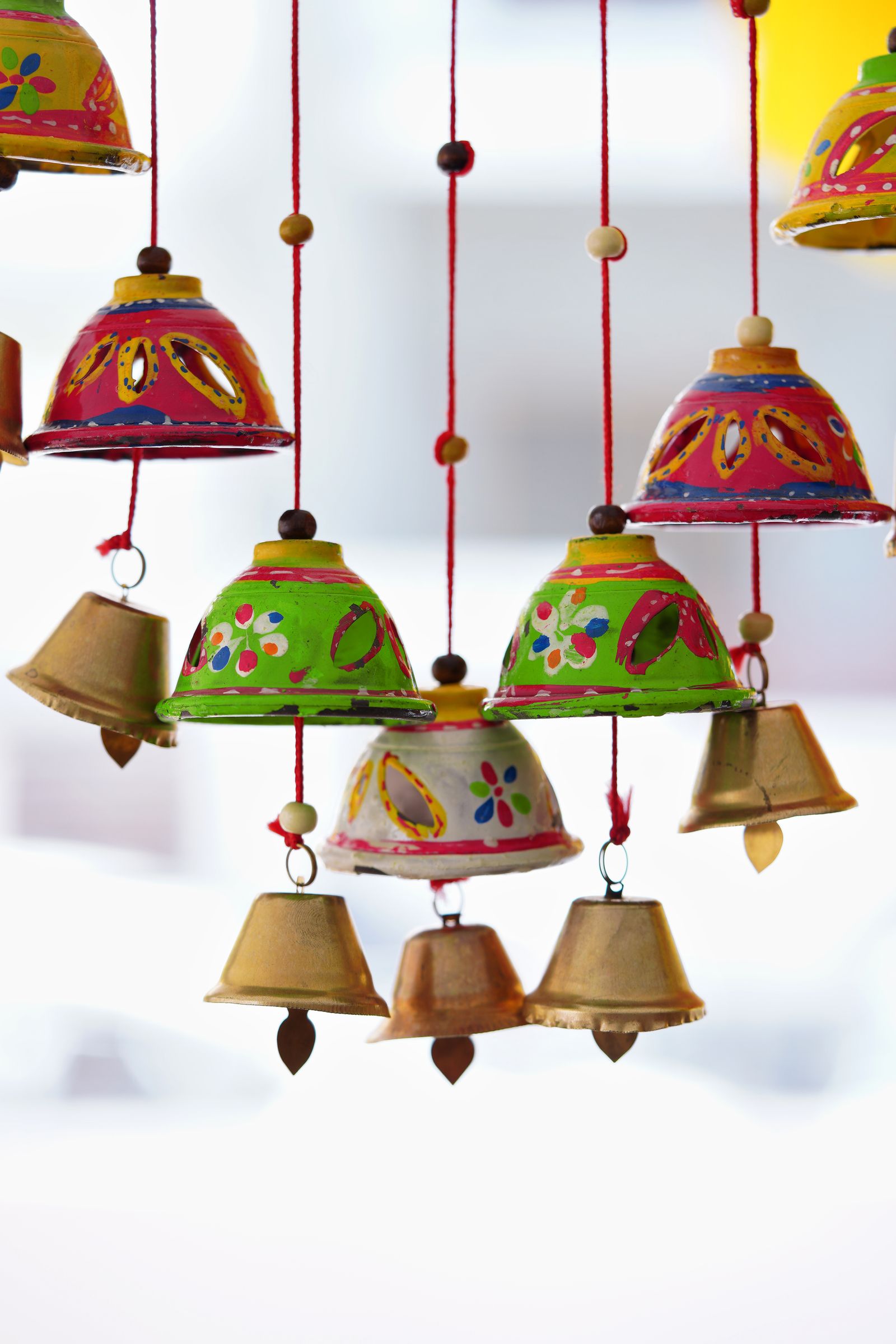
The furniture floor of the story
Furniture remains the anchor of the category, accounting for 40.12% of the home decor market in 2025. It is also where the industry’s biggest financial swings have played out over the past two years. IKEA India, still the most-watched foreign entrant in the segment, reported revenue of ₹1,860 crore for FY25, up 6% year-on-year, with online sales growing a sharper 34% and the company serving close to 110 million customers across its channels during the year. Specific product lines saw demand spikes that read almost like viral moments: the BRIMNES day bed was up 131% year-on-year, and the BILLY bookcase — IKEA’s iconic shelving unit — was up 153%. IKEA for Business, its push into offices and commercial fit-outs, grew 20% and now makes up 19% of total sales, a sign that the growth story in Indian interiors is no longer just about homes.
Domestically, Godrej Interio has held its ground as the largest organized player, commanding roughly 15% of the organized furniture segment. But the more dramatic movement has been among India’s digital-first furniture brands. Wakefit, which started as a mattress company, crossed roughly ₹1,000 crore in revenue in FY24 — up 24% on the year — and is believed to have grown a further 20-25% in FY25, making it the largest D2C home-furnishings player in the country by revenue. Pepperfry, once valued at $350 million and long considered the pioneer of India’s online furniture category, posted its first EBITDA profit only in August 2025, after years of losses — and is now reportedly being absorbed in a distress-sale acquisition by real estate firm TCC Concept. Urban Ladder, once Pepperfry’s fiercest rival, was folded into Reliance Retail back in 2021 for approximately ₹182 crore, a fraction of what it once raised from investors. The furniture wars of the last decade, in other words, have produced one scaled winner in Wakefit, one struggling pioneer in Pepperfry, and one absorbed also-ran in Urban Ladder — while a Swedish flat-pack giant and a homegrown industrial conglomerate quietly keep compounding in the background.
Where the “story” actually sells
The more interesting shift is happening away from the furniture aisle, in the smaller-ticket, higher-margin world of decor: textiles, wall art, lighting, ceramics, and handcrafted objects. This is where “story” stops being a marketing metaphor and starts being the literal product description. Brands such as Jaypore and Nicobar have built their entire positioning around provenance — which artisan cluster a textile came from, which region a weave belongs to, what technique a potter used. Jaypore alone works with more than 30 artisanal clusters across India, translating traditional craft into home decor products for a digital, urban audience willing to pay a premium once they understand the story behind the object.
That premium adds up to real money at the national level. India’s handicraft exports touched ₹33,122.79 crore — about $3.9 billion — in FY25, according to the Export Promotion Council for Handicrafts, even before counting what is sold domestically through decor platforms. Geographical Indication tags, the legal mechanism that ties a craft to its place of origin, have become an underappreciated economic tool in this story: Odisha’s Pipli textile art, for instance, received GI protection back in 2008, giving artisans a legal shield against mass-produced imitations and, crucially, a marketing hook that decor brands now use explicitly in product listings. Blue pottery from Rajasthan, Madhubani paintings from Bihar, and woodcraft from Kerala are increasingly sold not as generic “ethnic decor” but as named, traceable regional products — a shift that has as much to do with e-commerce brands needing differentiated inventory as it does with genuine craft revival.
The homes writing the fastest-growing chapter
If there is a single statistic that captures how far this story has traveled beyond India’s metros, it is this: Tier-3 cities accounted for 50.7% of all online orders during Diwali 2025, according to e-commerce data tracked through the festive season. That is not a rounding error — it means more than half of India’s festive online shopping volume now originates outside the country’s largest cities, a dramatic shift from a decade ago when metro India dominated online decor and furniture spending almost entirely. The pattern was already building in 2024, when Tier-2 and Tier-3 cities contributed over 60% of new online shoppers during the festive window, and Tier-2-plus festive spending grew 13% year-on-year — up from 9% growth the year before — comfortably outpacing metro growth. Per-shopper spending during the 2024 festive season rose 5-6%, and total online festive spending crossed $13 billion, a 25% jump from the prior year.
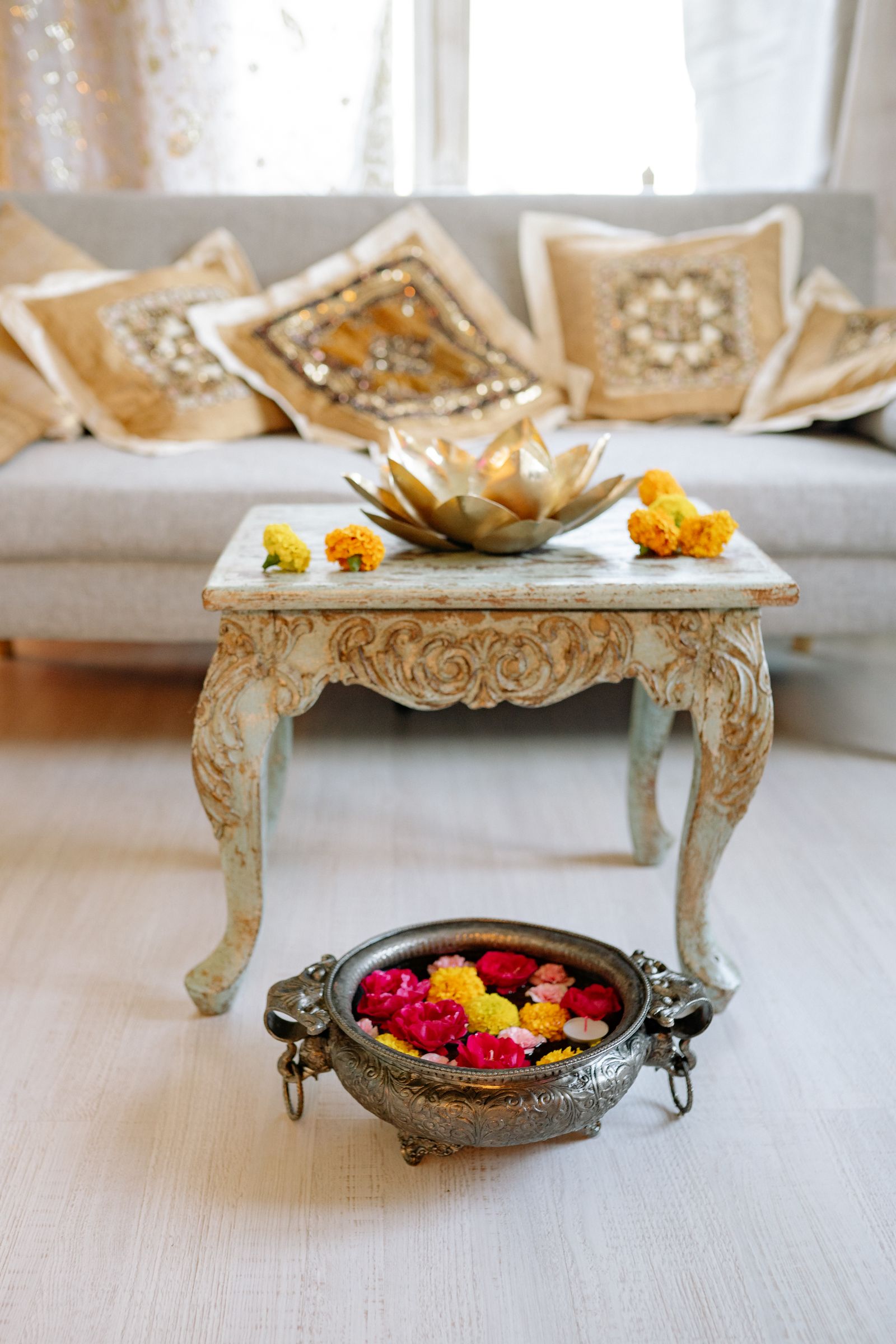
Put together, these numbers describe an industry whose center of gravity is physically moving: away from South Delhi and South Mumbai showrooms and toward Indore, Coimbatore, Bhopal, and dozens of similar cities where rising incomes are meeting, for the first time, easy access — via apps, not storefronts — to design language that used to be available only in large metros. Personalization and customization, once boutique luxuries, are now standard offerings even at mid-market price points, precisely because digital catalogues make it cheap to offer regional and customized variants at scale.
What the numbers add up to
None of this means the industry has settled into a stable shape. The gap between IKEA’s ₹1,860 crore and Wakefit’s ~₹1,000 crore — both growing, both profitable or near it — sits uneasily next to Pepperfry’s distress sale and Urban Ladder’s absorption into Reliance, suggesting that scale and capital discipline, not just brand storytelling, still decide who survives in furniture specifically. Decor, by contrast — lighter, cheaper to ship, easier to personalize, and inseparable from the artisan-story premium — looks like the segment where smaller, narrative-driven brands can still carve out defensible space against both IKEA-scale players and undifferentiated marketplace competition.
The throughline across both segments is the same one embedded in the numbers: India’s home decor economy, expected to be worth somewhere between $40 billion and $48 billion by the turn of the decade depending on how it’s measured, is no longer being built primarily in showrooms in Delhi or Mumbai. It is being built in Tier-3 living rooms furnishing themselves for the first time online, in artisan clusters turning centuries-old craft into GI-tagged export lines worth billions, and in the space between a Swedish bookcase and a hand-thrown Rajasthani pot — which, increasingly, is where an Indian home actually lives.
Sources: India Brand Equity Foundation (IBEF); India home decor and home furniture market research (industry estimates, 2025-2034); IKEA India FY25 results (Business Standard, Indian Retailer, Inter IKEA Group); Inc42 reporting on Pepperfry, Urban Ladder and Wakefit; Export Promotion Council for Handicrafts (EPCH) FY25 export data; festive/Diwali 2024-25 e-commerce spending data (industry trackers); reporting on Jaypore, Nicobar and India’s GI-tagged craft economy.