

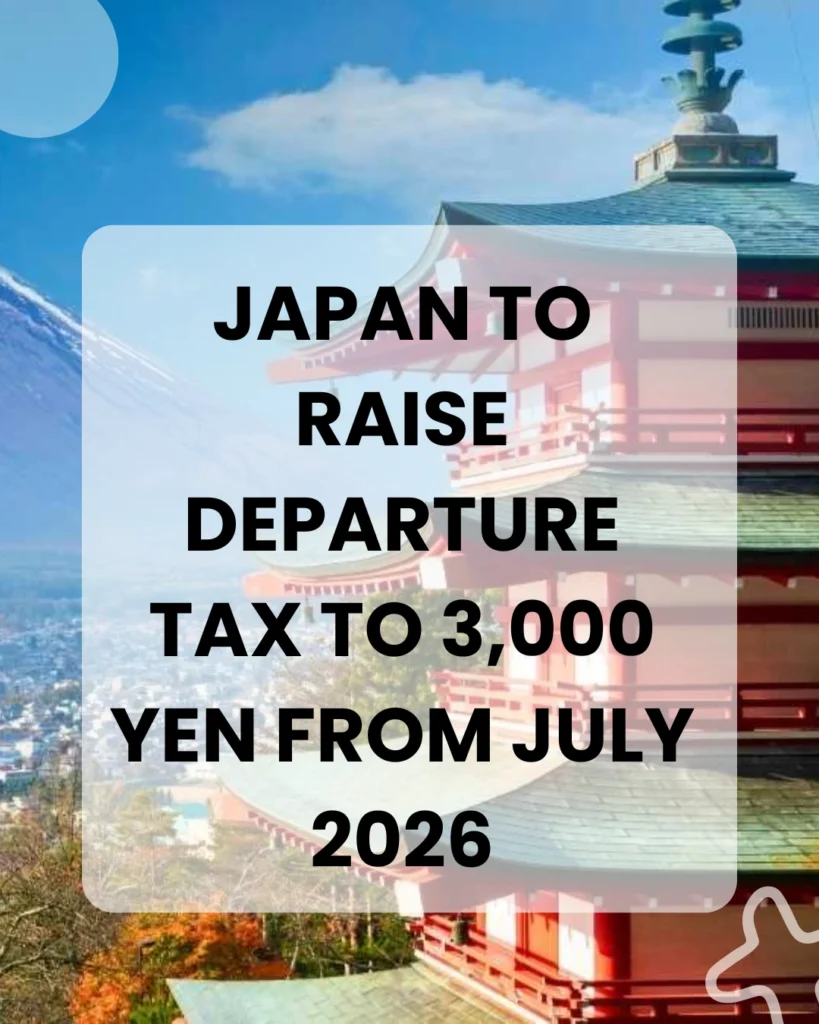
Japan is set to introduce higher tourist taxes and expanded accommodation levies from July 2026, as part of a broader strategy to manage overtourism and strengthen its tourism infrastructure.
The move reflects a growing global shift toward sustainable tourism, where destinations aim to balance visitor growth with the well-being of local communities.
Rising Departure Tax for International Travellers
Japan first introduced an international tourist departure tax in 2019. However, starting July 2026, the fee will increase significantly:
- From Japan Yen 1,000 to Japan Yen 3,000 per person
- Applicable to all travellers leaving Japan by air or sea
- Included automatically in airline or cruise ticket prices
Young children under the age of two are generally exempt from this charge.
Although the increase is relatively modest for travellers, the government plans to use the additional revenue to fund:
- Airport modernisation
- Improved transport systems
- Multilingual services
- Regional tourism development
Expansion of Local Accommodation Taxes
Alongside the departure tax, Japan is rapidly expanding its local accommodation tax system.
Unlike a nationwide policy, these taxes are set by individual cities and prefectures, allowing them to tailor rates based on tourism demand.
Key Highlights:
- Typically JPY 100–500 per person per night
- Higher rates for premium hotels
- Collected at hotel check-out
By early 2026, more than 20 regions have introduced or approved such levies.
Regional Implementations Across Japan
Several regions are actively adopting or expanding accommodation taxes:
- Hokkaido – Introduced a sliding-scale tax based on room prices
- Hiroshima – Implemented taxes to fund tourism infrastructure
- Okinawa – Planning a 2% tax on accommodation bills
- Sendai and Gifu – Rolling out similar frameworks
These measures aim to improve:
- Public transport systems
- Tourist facilities
- Site management and preservation
Kyoto Introduces Highest Hotel Tax in Japan
Kyoto has taken the most aggressive step by introducing Japan’s highest-ever accommodation tax.
Key Changes:
- Higher taxes for mid-range and luxury hotels
- Up to JPY 10,000 per person per night for premium stays
The policy is designed to address overtourism in Kyoto’s historic districts, where:
- Crowded streets and temples have become common
- Local residents face increasing disruptions
Revenue will be used for:
- Heritage conservation
- Infrastructure upgrades
- Managing tourist flow
Why Japan is Increasing Tourism Taxes
Japan’s tourism industry has rebounded strongly after the pandemic, with cities like:
- Tokyo
- Osaka
- Kyoto
experiencing record visitor numbers.
This surge has led to:
- Overcrowded public transport
- Pressure on historic sites
- Strain on local services
Tourism taxes are being used as a tool to:
- Ensure visitors contribute to infrastructure
- Support sustainable tourism
- Protect cultural and natural heritage
Impact on Travellers
For most tourists, the financial impact will remain manageable:
- A short stay may only add a few hundred yen
- Longer trips across multiple cities may increase costs slightly
- Luxury travel, especially in Kyoto, may see higher expenses
Overall, Japan aims to maintain its appeal while ensuring responsible and sustainable travel experiences.
Industry Outlook: A Global Trend
Japan’s approach reflects a broader global trend where destinations are:
- Introducing tourism taxes
- Focusing on quality over quantity
- Investing in sustainable infrastructure
Countries worldwide are increasingly adopting similar measures to balance tourism growth with community well-being and environmental preservation.
Key Takeaway
Japan is not discouraging tourism — it is reshaping it
👉 From mass tourism → sustainable tourism
👉 From volume → value-driven travel