
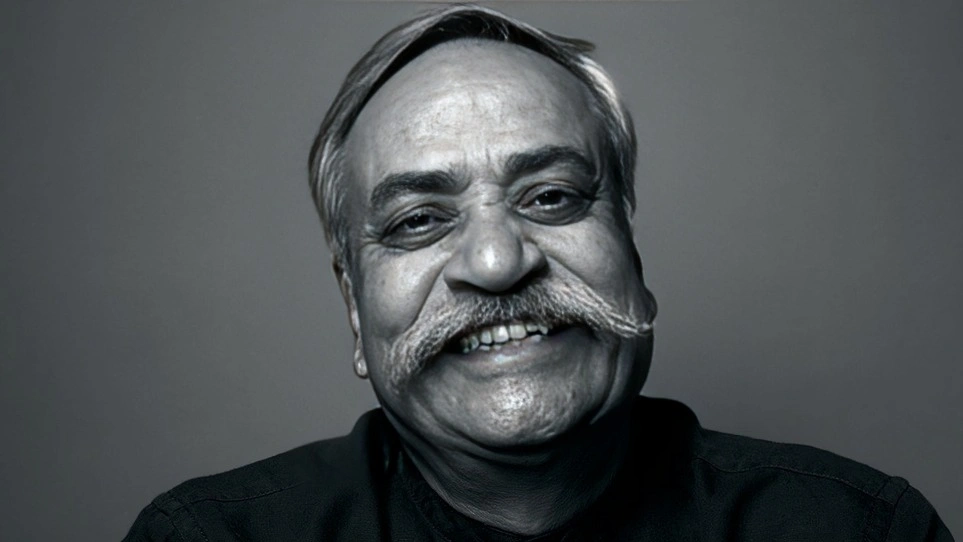
When the Government of India announced a posthumous Padma Bhushan for Piyush Pandey, the moment felt less like a surprise and more like a long-delayed acknowledgment. For over four decades, Pandey didn’t just create advertisements—he reshaped how India spoke to itself through brands, politics, humour, and emotion.
Pandey, who passed away in 2025, is widely regarded as the most influential creative leader the Indian advertising industry has produced. At a time when Indian advertising leaned heavily on polished English, global aesthetics, and aspirational distance, he made a radical choice: to speak in the language of everyday life. In doing so, he transformed advertising from persuasion into shared cultural expression.
An Unconventional Journey Into Advertising
Piyush Pandey’s path to advertising was anything but linear. Before joining Ogilvy India in 1982, he lived many lives—cricketer, tea taster, and even a construction worker. Those experiences shaped how he viewed people. He never saw audiences as “consumers” or “target segments,” but as individuals shaped by geography, class, humour, and lived reality.
This grounding gave his work a rare authenticity. Advertising, under Pandey’s influence, stopped talking down to people and started talking with them. It mirrored the way India joked, argued, celebrated, and remembered.
Campaigns That Became Cultural Memory
Pandey’s campaigns went far beyond selling products. They entered the bloodstream of popular culture.
Cadbury’s “Kuch Khaas Hai”, Asian Paints’ “Har Ghar Kuch Kehta Hai”, and Fevicol’s long-running, unforgettable advertisements didn’t just build brands—they built emotional familiarity. These lines travelled effortlessly across generations, regions, and social settings, quoted in homes, classrooms, and street conversations.
What Pandey did differently was not simply introducing Hindi or regional language into mainstream advertising. He placed emotion, humour, and cultural insight at the centre of persuasion. The result was advertising that felt intimate rather than instructive.
Redefining the Grammar of Indian Advertising
Colleagues often noted that Pandey’s influence went deeper than language or tone. He fundamentally altered the structure of Indian advertising—moving it away from surface-level cleverness toward emotional truth. For him, the best ideas were not those that impressed juries but those that resonated instinctively with people.
This philosophy extended beyond consumer brands. Pandey also played a defining role in political communication. The slogan “Ab ki baar, Modi sarkar” became one of the most recognisable political lines in modern Indian history. Even critics of its politics acknowledged the intuitive grasp of public sentiment behind it—a reminder of Pandey’s ability to tap into collective mood.
Leadership Without Ego
Despite his towering stature, Pandey resisted the image of the solitary creative genius. He consistently described advertising as a team sport and avoided personal glorification. Under his leadership, Ogilvy India became one of the most awarded agencies globally and a nurturing ground for creative leaders who carried forward his belief in empathy-led storytelling.
His leadership style was quiet but firm, rooted in listening rather than authority. Many of India’s leading creative minds credit Pandey not just for ideas, but for teaching them how to observe people more closely.
Global Recognition, Indian Soul
In 2018, Piyush Pandey and his brother, filmmaker Prasoon Pandey, became the first Asians to receive the Lion of St. Mark at the Cannes Lions International Festival of Creativity. The lifetime achievement award marked a turning point when Indian advertising claimed its rightful place on the global stage—without losing its local soul.
A Voice of Caution in a Changing Industry
Even as advertising evolved toward data-heavy, AI-driven creativity, Pandey remained sceptical of trends that prioritised novelty over meaning. He often warned against mistaking process for impact. Technology, he believed, was always secondary to emotion.
Audiences, he reminded the industry, don’t admire how an ad was made—they remember how it made them feel.
Pandey stepped down as executive chairman of Ogilvy India in 2023, moving into an advisory role. The transition was characteristically understated. Yet his influence continued to echo through the ideas, people, and philosophies he left behind.
Why the Padma Bhushan Matters
By honouring Piyush Pandey with the Padma Bhushan, the Indian state has done more than recognise an individual. It has acknowledged advertising as a cultural force, capable of shaping collective memory, language, and identity.
In a country defined by complexity and contradiction, Pandey’s greatest achievement was both simple and profound: he listened to India carefully—and reflected it back with warmth, honesty, and familiarity.
In doing so, he gave Indian advertising a voice that felt real, rooted, and unmistakably its own.