
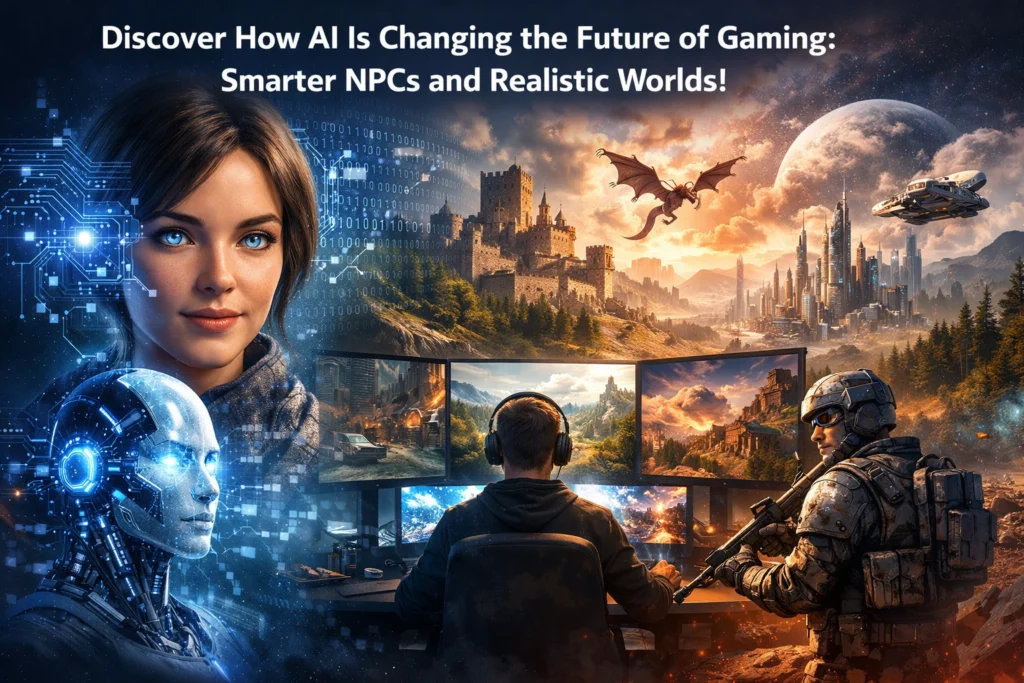
The gaming industry has always been driven by innovation, and in 2025, artificial intelligence (AI) is taking that innovation to the next level. From smarter non-player characters (NPCs) to ultra-realistic worlds, AI is transforming how games are developed, played, and experienced. For the fast-growing Indian gaming community — which now includes over 568 million gamers, according to a 2025 FICCI-EY report — this revolution is not just global but deeply local, shaping how India plays and creates games.
AI and the Evolution of Gaming
In the past, video game AI was simple: NPCs followed fixed patterns, repeated scripted dialogues, and had limited reactions. But with the rise of machine learning (ML), natural language processing (NLP), and generative AI, gaming experiences are becoming dynamic and lifelike.
Modern AI algorithms can now learn from player behavior, adapt to playing styles, and create personalized experiences. Games are no longer static — they evolve with you. This change has opened new possibilities for developers and players alike.
Smarter NPCs: Beyond Scripts and Predictability
One of the most exciting AI-driven changes in gaming is the creation of smarter NPCs. NPCs are the lifeblood of most games — whether they’re allies, enemies, or random characters that bring worlds to life. With AI, these characters are becoming more intelligent, emotional, and responsive.
In games like Cyberpunk 2077, The Last of Us Part II, and the upcoming Grand Theft Auto VI, developers are using advanced AI systems that allow NPCs to respond realistically to player choices. Instead of repeating the same lines, NPCs can analyze context, adjust tone, and react dynamically.
In India, homegrown studios like Nodding Heads Games (makers of Raji: An Ancient Epic) and SuperGaming (creators of Indus Battle Royale) are experimenting with AI-driven interactions. Indian developers are now integrating AI tools such as ChatGPT-powered dialogue systems and reinforcement learning models to make NPCs more human-like. The goal is to create characters that can learn from the player and contribute meaningfully to storytelling.
Realistic Worlds Powered by AI
AI isn’t just changing characters — it’s revolutionizing world design. Traditional game development required artists and programmers to manually build every detail. Now, with generative AI tools such as Unreal Engine’s MetaHuman Creator and Unity’s Muse, developers can create vast, photorealistic environments faster than ever.
AI can automatically generate terrain, weather systems, and realistic lighting, making game worlds more immersive and visually stunning. This technology has enabled indie developers — including several in India — to compete with global studios.
For instance, AI is being used to simulate crowds in cricket games, generate authentic Indian cities, and even recreate historical landmarks for cultural storytelling. In 2025, we’re seeing more games rooted in Indian mythology, history, and festivals — all powered by AI’s creative potential.
AI-Driven Personalization and Adaptive Gameplay
AI also enhances personalization. Games can now analyze how a player reacts — whether they prefer combat, exploration, or strategy — and then adjust gameplay accordingly. This adaptive design makes every session unique.
For example, AI can dynamically tweak the difficulty level, modify storylines, or even adjust music based on your emotions. Developers use emotion-recognition AI and behavioral analytics to make experiences deeply personal.
In India, where mobile gaming dominates, personalization is becoming a major trend. Platforms like Dream11, Loco, and Mobile Premier League (MPL) are integrating AI to tailor recommendations, rewards, and user experiences for millions of players.
Generative AI in Game Development
Behind the scenes, AI is also reducing development time and boosting creativity. Generative AI can create textures, animations, and even dialogue in minutes. Tools like ChatGPT, Midjourney, and Runway ML are already part of many developers’ workflows.
Indian studios are leveraging AI to lower costs and accelerate production — crucial in a price-sensitive market. For instance, AI can automatically localize games into regional languages, making them accessible to India’s diverse audience.
Ethical and Technical Challenges
Despite the excitement, AI-driven gaming brings challenges. Developers must address data privacy, bias in AI behavior, and unintended outcomes — such as NPCs behaving unpredictably. There’s also concern about job displacement as AI automates creative roles. Indian regulators are discussing frameworks to ensure that AI in gaming remains safe and ethical.
The Future: AI and India’s Gaming Boom
India’s gaming market is projected to reach USD 7.5 billion by 2028, with AI playing a pivotal role in that growth. As 5G connectivity spreads and affordable GPUs become common, Indian gamers will experience worlds that respond to them in real time.
From AI-powered storytelling to voice-enabled NPCs in local languages, the future of gaming in India is interactive, inclusive, and intelligent. AI is no longer just a background feature — it’s the creative heartbeat of the next generation of games.
Conclusion
AI is redefining the gaming experience — turning static worlds into living ecosystems and transforming NPCs into true companions and rivals. For Indian gamers and developers, this revolution means limitless potential to tell stories, build worlds, and craft experiences that feel human. As technology evolves, one thing is certain: the future of gaming will be smart, emotional, and powered by AI.